


Baked Puerto Rican Pastel is a version of our individually wrapped traditional pastel except that it is baked in a large baking pan. The dough and pork meat will be prepared in the same manner as for regular pasteles. However, instead of wrapping the pastel individually, the dough and meat will be layered to form one huge pastel in a large baking pan. Once the pastel is baked, you can cut the pastel into individual servings.
This is a quick and easy version of preparing pastel for a small crowd, and your guests can serve themselves without the hassle of unwrapping each pastel. You can serve this dish as a complete meal or accompanied with Roasted Pork Shoulder and Rice with Pigeon Peas.
For your information, the traditional pasteles are individually wrapped in banana leaves, boiled and mainly served during the Christomas Holidays. They are considered our version of tamales. The dough (masa) consists of grated yautías, green bananas and green plantains that is filled with stewed pork meat.
A Little Food History!
The pastel consists of ingredients from all three ethnic groups that define the Puerto Rican culture. Some of these ingredients, for example, are: hot chili peppers (ajíes caballeros), tannier (yautías), culantro, ajíes dulces and annatto (achiote) – Taíno Indians; garbanzos, raisins, olives, cilantro, onions, garlic, olive oil, capers and pork – Spain; and plantains and green bananas – West Africa.
Preparing the Annatto Oil!
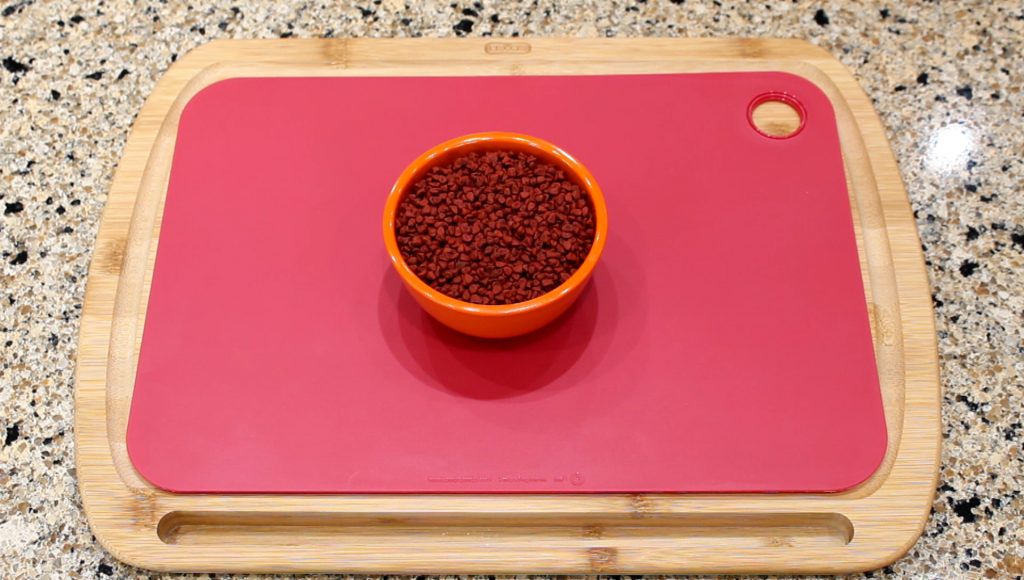
The annatto seeds act as a coloring agent to our tropical cuisine. For this recipe, you will need ¾ cup of annatto seeds.
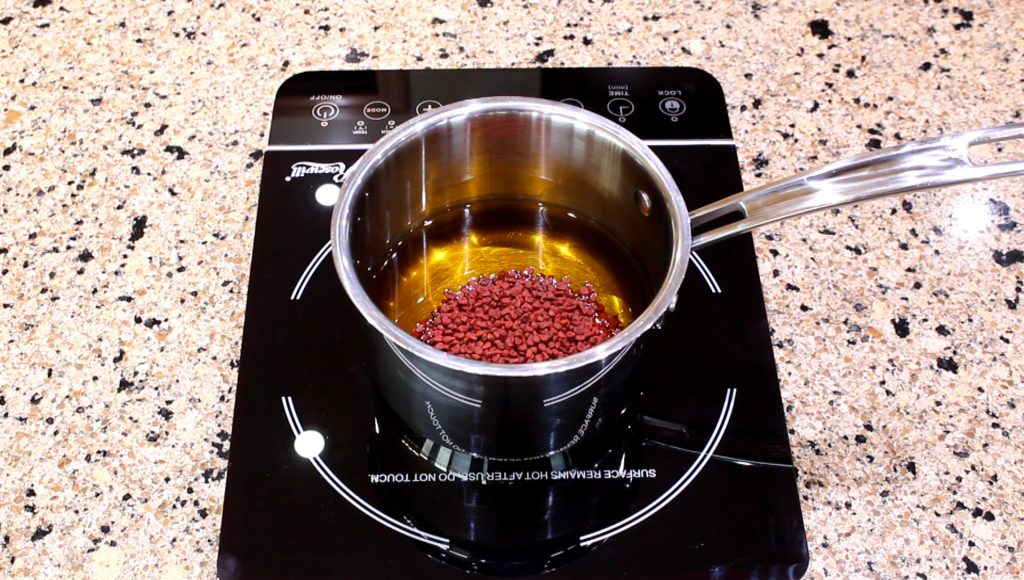
In a saucepan, pour 2 cups of extra virgin olive oil and add ¾ cup of annatto seeds. Stir well.

Heat oil and annatto seeds over medium low heat until the oil turns a bright red orange color, approximately 5 minutes. Don’t overheat the oil mixture because the annatto seeds and oil will turn almost black.

The last step is to strain the oil, using a fine mesh sieve. Carefully strain the annatto oil into a glass bowl.

Discard the used annatto seeds. Cover bowl with lid and set aside.
Cooking the Pork Filling!

This is 1½ pounds of pork shoulder butt roast that has been rinsed, trimmed of excess fat and cut into ½-inch cubes.

Pour ½ cup of water into saucepan and add the pork meat. Stir well. Cook for 20 minutes over medium heat. Cover saucepan with a lid.
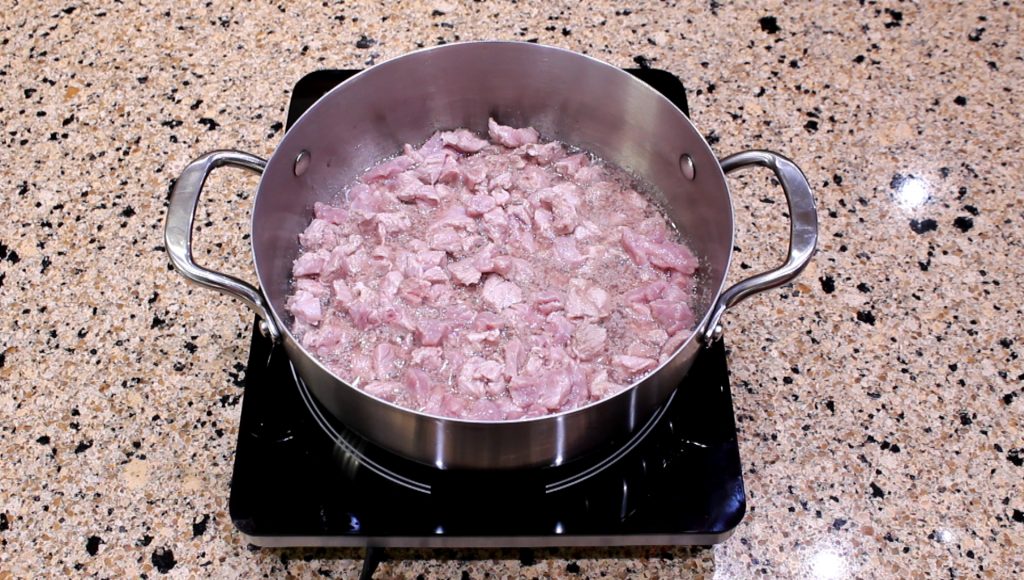
Let’s stir the pork meat after 3 minutes of cooking. Cover saucepan with lid and continue cooking, stirring occasionally.

The pork meat has been cooking for 20 minutes so we are ready to add the remaining ingredients.
Stewing the Pork Meat!

Add 4 ounces of diced lean ham; 1½ teaspoons of Lite salt (or to taste); ⅓ cup of annatto oil; 3 minced garlic cloves; 2 tablespoons of tomato sauce; and 2 tablespoons of sofrito (made with culantro).
Click on the links to learn How to Prepare a Large Batch of Sofrito and/or How to Make Sofrito for a Single Meal.
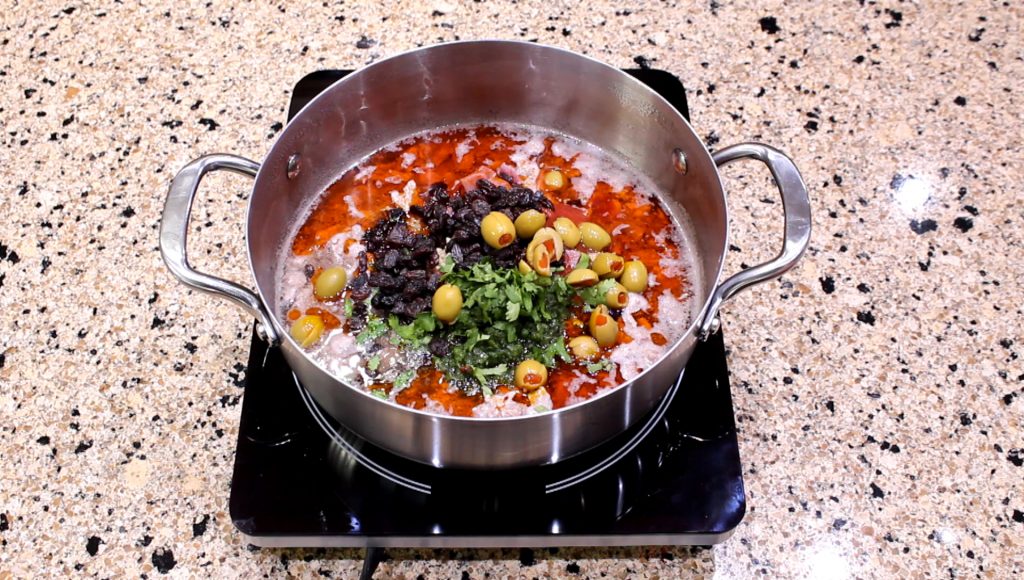
Continue with 4 sprigs of chopped cilantro; ½ cup of seedless raisins (this is optional – the raisins provide a touch of sweetness to the pastel); and 15 pimiento-stuffed green olives, cut into halves.

Lastly, add 1 tablespoon of capers and 1 can (15 ounces) of garbanzo beans (chick peas) without liquid.

Stir all the ingredients until well blended and bring the liquid to a boil.

When the liquid is boiling, reduce the heat to medium low and stir the pork meat. Cook for 40 to 50 minutes or until the pork is thoroughly cooked and most of the liquid is absorbed. Cover saucepan with lid.

The pork meat has been cooking for 50 minutes and most of the liquid is absorbed. The meat is definitely coated with the tomato-oil based sauce. If you still have plenty of liquid, then remove the lid from saucepan and cook over medium heat to thicken sauce. The pork filling is ready.
Cutting and Peeling the Viandas to Prepare the Dough!
The term Viandas refers to root vegetables and starchy fruits.

This is a very, very green banana. Cut off both ends with a knife.

Make three separate slits lengthwise from top to bottom with a knife barely touching the flesh.

With your hands, remove the peel and continue this process until the skin is completely removed. For this recipe, you will need 7 green bananas.
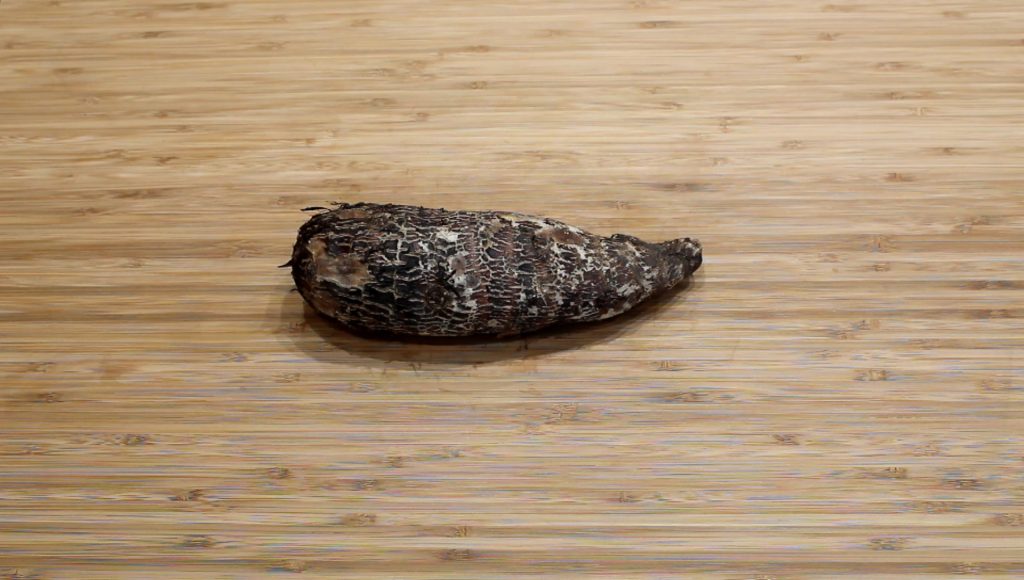
This is a Yautía known as Tara Root. It has a brown and shaggy skin. The flesh can vary in color from white, yellow or pink.

Cut off both ends with a knife.
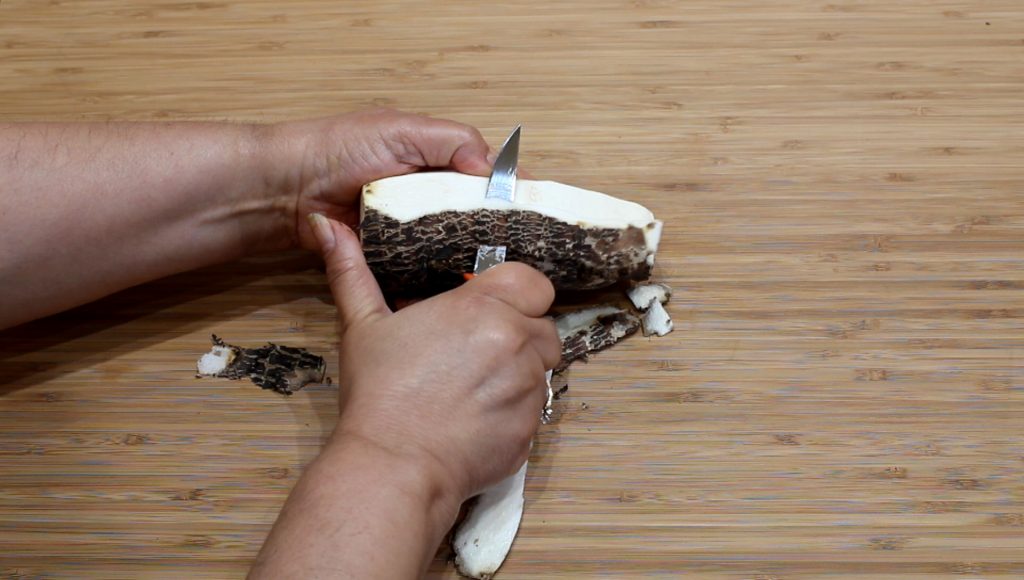
Peel the skin of the Yautía with a knife or vegetable peeler. For this recipe, you will need 1½ pounds of yautías already peeled.

This is a green plantain. Cut off both ends of the plantain.

Make three separate slits lengthwise from top to bottom with a knife barely touching the flesh.

With your hands, peel the plantain. For this recipe, you will need 1 green plantain.

We just finished cutting, peeling and rinsing the viandas. The next step is to grate the viandas.
Grating the Viandas Using a Food Processor!

Place the yautia into the opening of the lid.
NOTE: Some individuals prefer to grate the viandas with a box grater or with a specialty machine grater for pasteles that can be purchased online.

Slightly apply pressure with the food pusher to grate the yautia. Continue this process until all the viandas are grated.

All the viandas have been grated for our pastel.

Place dough (masa) into a large bowl and stir until all the grated viandas are well blended.
Seasoning the Dough (Masa)!

Pour 1 cup of annatto oil and 1½ tablespoons of lite salt or to taste.

Stir the dough until the color of the dough is uniform – a bright orange color. If you feel the dough needs more coloring, then add annatto oil in small amounts.

Gradually pour 1 cup of warm milk and stir until well blended. The milk will give the dough a creamier texture.

We just finished preparing the dough.
Layering the Pastel in a Baking Pan!

Cut 2 plantain leaves to place inside a baking pan, measuring 13 x 9 x 2 inches. Clean each leaf on both sides with a wet kitchen dish cloth before lightly brushing one side of each leaf with annatto oil.

Grease the bottom and sides of baking pan with annatto oil.
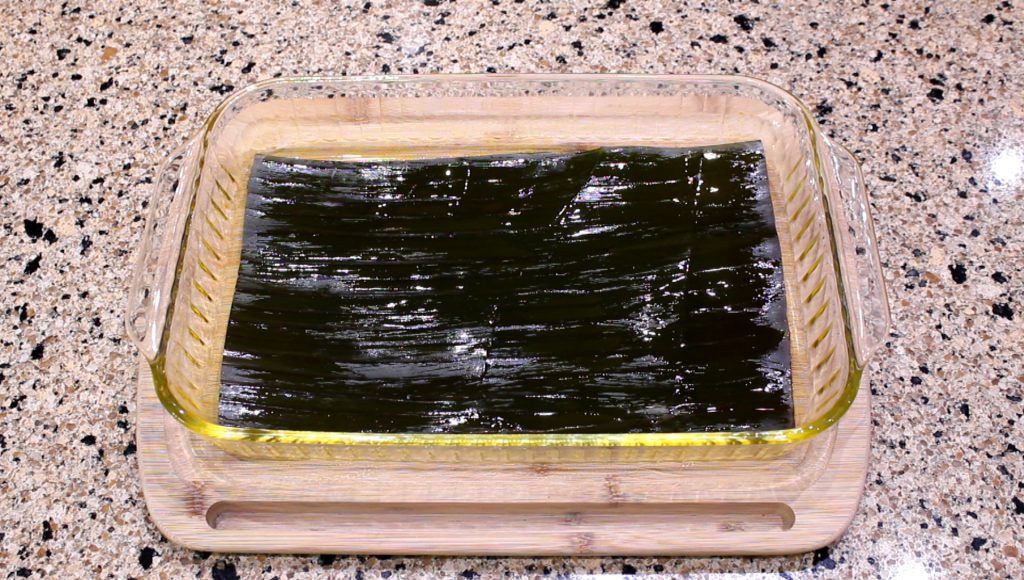
Place a plantain leaf at the bottom with greased side up.

We can now add the first layer with one half of the masa, approximately 4 cups.

With a spoon, spread evenly to all corners of baking pan.

The second layer is to add the pork filling on top of dough. Spread evenly as well. For your information, I used the entire pork filling.

The last layer will be adding the other half of dough (masa), which is 4 cups.

Make sure to completely cover the pork filling with the dough.

Place plantain leaf with greased side down. Cover entire pan with aluminum foil.
Baking the Puerto Rican Pastel!

I am going to bake the pastel, using the water bath method. I filled this large aluminum pan with ½ inch of water.
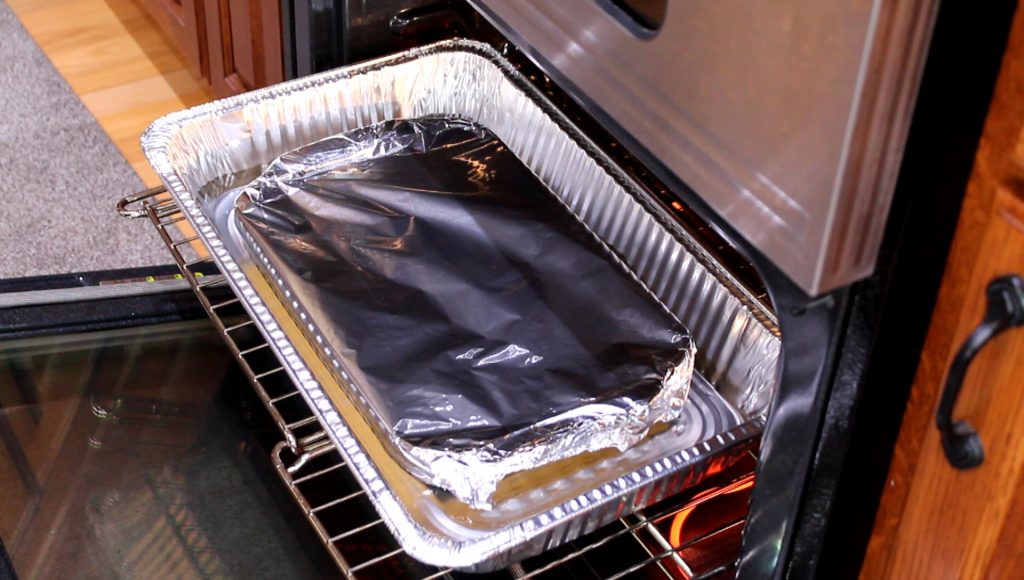
Insert baking dish that contains the pastel into aluminum pan with water. Bake at 400°F for 40 to 50 minutes or until the center of pastel is thoroughly cooked.

After 2 hours of baking, let’s remove the plantain leaf.

The dough is thoroughly cooked. Let stand for about 10 to 15 minutes before cutting.

I just finished cutting the pastel (do not cut into bottom leaf) into 6 (six) 4-inch squares. However, you can also cut the pastel into 12 (twelve) 3-inch squares if you prefer. Use a spatula to lift a serving of the pastel.
NOTE: The plantain leaves are not edible.
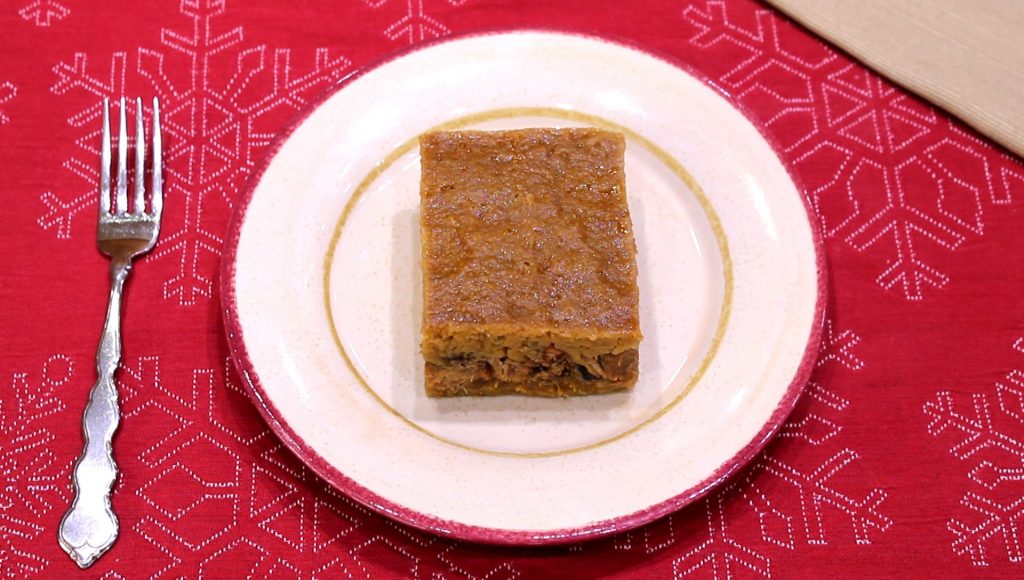
You can serve this dish as a complete meal or accompanied with Roasted Pork Shoulder and Rice with Pigeon Peas.
NOTE: If you have any leftover pastel, you can steam them, using a vegetable steamer, for a creamy and moist pastel instead of microwaving.
Click on the button below to watch my YouTube video on How to Prepare Baked Puerto Rican Pastel!
Recipe and Nutritional Facts!
Nutritional information is provided as a courtesy and is approximate only. Please refer to our Nutritional Facts Disclaimer for more information.
Print
Baked Puerto Rican Pastel
- Prep Time: 1 Hour
- Cook Time: 3 Hours 15 Minutes
- Total Time: 4 hours 15 minutes
- Yield: 12 Servings 1x
Description
- Baked Puerto Rican Pastel is a version of our individually wrapped traditional pastel except that it is baked in a large baking pan. The dough is very creamy and the meat, pork meat filling, is perfectly seasoned. This is a quick and easy version of preparing pastel for a small crowd. Your guests can serve themselves without the hassle of unwrapping each pastel.
Ingredients
Annatto Oil:
- 2 cups extra virgin olive oil
- ¾ cup annatto seeds
Meat Filling:
- 1½ pounds pork shoulder butt roast, rinsed, trimmed of excess fat and cut into ½-inch cubes
- ½ cup water
- 4 ounces lean ham, diced
- 1½ teaspoon salt (low sodium) or to taste
- ⅓ cup annatto oil
- 3 garlic cloves, peeled and minced
- 2 tablespoons tomato sauce
- 2 tablespoons sofrito
- 4 sprigs cilantro, chopped
- ½ cup seedless raisins, optional
- 15 pimento-stuffed green olives, cut into halves
- 1 tablespoon capers, drained
- 1 can (15 ounces) garbanzo beans, without liquid
Dough Mixture:
- 7 green bananas, peeled
- 1½ pounds yautía (taro root), peeled
- 1 green plantain, peeled
- 1½ tablespoons salt (low sodium) or to taste
- 1 cup annatto oil
- 1 cup warm skim milk or the milk of your preference
Instructions
- In a saucepan, pour oil and add annatto seeds over medium low heat. Stir well and heat until the oil turns a bright red orange color, approximately 5 minutes. Strain oil.
- Pour water and add pork meat into a 4-quart saucepan. Cover saucepan and cook over medium heat for 20 minutes, stirring occasionally.
- Add remaining ingredients listed for the meat filling. Bring the liquid to a boil.
- Reduce heat to medium low. Cook for 50 minutes or until pork meat is thoroughly cooked and most of the liquid is absorbed. Set aside.
- Grate the starchy fruits and root vegetables using a food processor or box grater.
- Place dough into a large bowl and stir until well blended.
- Add salt and annatto oil and stir until the color of dough is uniform.
- Gradually pour warm milk and stir dough until well blended.
- Cut 2 plantain leaves to place inside a baking pan, measuring 13 x 9 x 2 inches. Clean plantain leaves with wet cloth on both sides. Grease only one side of plantain leaf with annatto oil.
- Slightly grease bottom and sides of baking pan with annatto oil. Place one plantain leaf at the bottom of pan with greased side up.
- Layer with dough (4 cups) and spread evenly on top.
- Add second layer with the entire pork meat filling.
- Cover pork meat filling with another layer of dough (4 cups).
- Lastly, place the second plantain leaf with greased side down on top of dough. Cover pan with aluminum foil.
- Fill a large aluminum pan with ½ inch of water. Place the baking dish that contains the pastel into aluminum pan with water and place in oven.
- Bake for 1 to 2 hours at 400°F or until the pastel is thoroughly cooked.
- Let stand for 10 minutes before cutting. Remove top plantain leaf. Cut into even squares and serve warm.
Notes
The plantain leaves are not edible. When lifting a slice of the pastel with a spatula, make sure to keep the bottom leaf in pan.
If you have any leftover pastel, you can steam them, using a vegetable steamer, for a creamy and moist pastel instead of microwaving.
- Category: Meat Filling Dish
- Method: Baking
- Cuisine: Puerto Rican
Keywords: Pasteles, Pastel, Meat Pies, Baked Pastel
8 Comments. Leave new
Hola!!! Gracias por tan sencilla receta. Pregunta …. Se puede guardar en el congelador ?
★★★★★
Hola Maria, Sí, se puede preparar antemano y después ponerlo en el congelador para cocinarlo en el futuro. Muy similiar al pastel tradicional envuelto en hoja de plátano. También, debe de asegurarse que el molde se puede colocar en el congelador.
Tienes que descongelar antes de hornear? y cuanto tiempo en el horno
Hola Ruth, No tienes que descongelar el pastel para hornear pero a veces lo dejo afuera por 10 a 15 minutos antes de ponerlo en el horno. Se puede hornear por 15 a 30 minutos más, dependiendo el tipo de horno. Es muy importante de chequear frequentemente si el pastel esta completamente cocido durante esta etapa.
Hola Aida, cual processadorvusastes que tiene el grating disk? La mayoria de los food processor no traen ese disco. Tengo uno muy bueno que no gualla la masa con la textura deceada de un guallo de mano. Yo prefiero esa textura, trate el ninja y pude hacerlos y quedaron ricos, pero aun asi como no gualla, la textura es un poco diferente. Yo tengo mucha experiencia haciendo pasteles desde muy niña, (60+) hoy dia uso los ingredients casi igual que los de su receta, ya yo no uso la leche solo el caldo sabroso de la carne. Y tambien uso un pedazo de calabaza. Un dia quiero hacer uno pequeño horneado a ver si nos gusta. Muy bien explicada la receta para los novatos. Me gusta eso de la version de tu libro en 2 idiomas. Lo buscare para ver que otras recetas tienes. Ando buscando un buen pudin de pan y otras recetas tradicionales de PR para comparar. Happy Holidays 2024.
Hola Irma, El procesador de alimentos que yo uso es la marca “Braun CombiMax 650.” Se puede comprar por el internet. Sí, me gusta explicar las recetas muy detalladas. Felicidades!
Wonderful
Hola Liz, Sorry for the delay in responding, but your comment did not appear until now. I am glad that you were pleased with my step by step pastel post. It is a much easier version of preparing our pastel without sacrificing the flavor and quality. Enjoy your Memorial Day weekend.